Arcana at the BBC Proms – John Wilson conducts Respighi’s Roman Trilogy

Jonathan Aasgaard (cello), Sinfonia of London / John Wilson

Verdi Overture: La forza del destino (1861-2, revised 1869)
Walton Cello Concerto (1955-56)
Respighi Feste romane (Roman Festivals) (1928); Fontane di Roma (Fountains of Rome) (1915-16); Pini di Roma (Pines of Rome) (1923-4)

Royal Albert Hall, London
Friday 24 July 2026

Reviewed by Ben Hogwood Photos (c) BBC / Chris Christodoulou

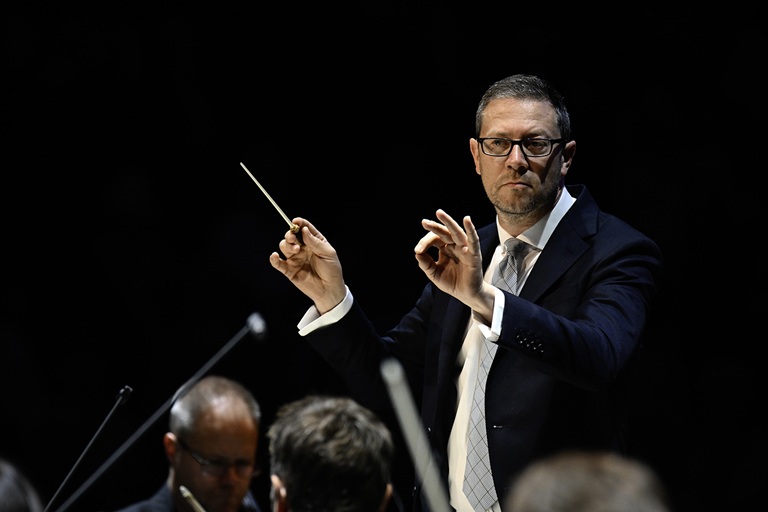
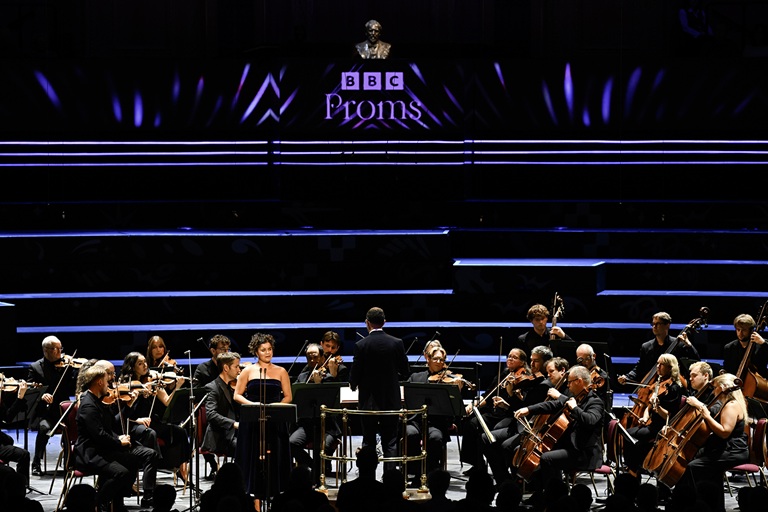
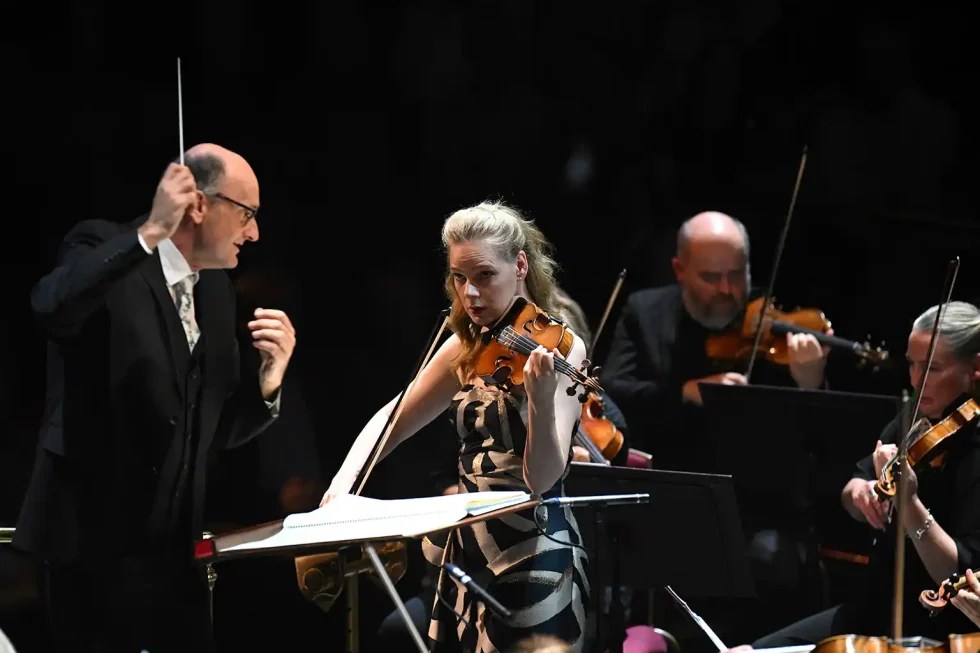
On a sultry Friday evening at the BBC Proms it was entirely appropriate for John Wilson and the Sinfonia of London to relocate their audience to the heat of Italy.

Verdi’s overture to La forza del destino was the curtain raiser, beautifully phrased and with its ‘fate’ theme brilliantly delivered by the strings. The lyrical counterpart – recognizable from certain beer adverts – simply floated on air.

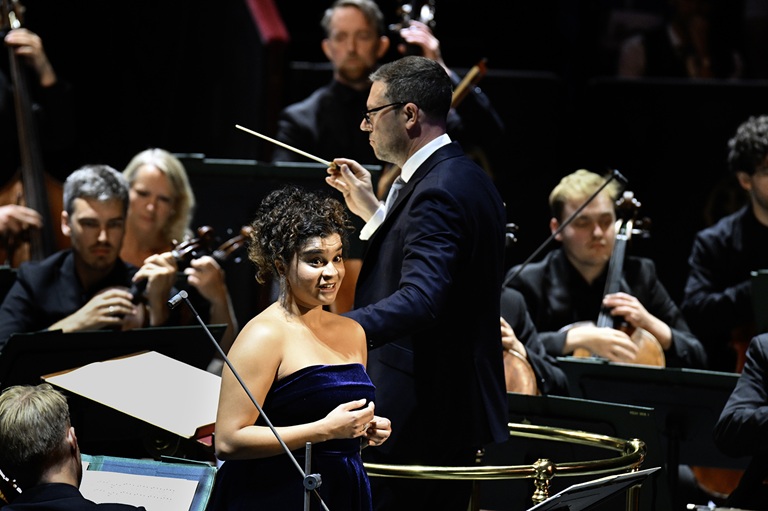
Walton’s Cello Concerto was similarly airborne, though this is a very different work, written while the composer was living on Ischia, in the Bay of Naples. The opening bars, though precise, were shrouded in mystery, the ticking chords from the orchestra striking an unease from which it took soloist Jonathan Aasgaard a while to emerge. The cello’s opening melody, one of Walton’s finest, was initially tentative but subsequent reappearances gave it more conviction, the orchestra providing exquisitely shaded support.

Aasgard has recorded the work with the Sinfonia of London, whose cello section he leads, and the established togetherness with the orchestra was a clear asset. As the faster music evolved, there was a singularity of voice, though not the extravert approach of some performances, the anxieties in Walton’s music remaining. These were ultimately banished by a lyrical third movement, then a terrific cadenza and some lively exchanges between soloist and orchestra, though even here the closing bars were left with an open-ended question. A compelling performance, nonetheless – and one to revisit.

To say Respighi throws open the doors and windows when writing for orchestra would be an understatement. It is rare to encounter works of such colour and characterisation, secured through an experienced hand whose training with Rimsky-Korsakov and Martucci yielded a bold and often extravagant style. Coarse, too, on occasion, as Wilson and his charges illustrated with the beginning of Roman Festivals.

The first of a triptych written by Respighi in homage to his home city, the festivals are not for the shrinking violet, with Christian martyrs thrown to the lions even before the end of the first movement. The loud music was suitably dramatic but there was reverence and restraint in the quiet passages, where we could have been in the depths of the Colosseum itself. Here there was extraordinary control, a quality not always associated with Respighi but one which served him well here. Jubilee was terrific, as was the cut and thrust of The October Festival, and it is a credit to Wilson that the most uneven piece of the triptych was brought off with conviction, its finale reminding us of Stravinsky’s influence on the composer.

This is also evident in Fountains of Rome, but the riot of colour that found the orchestral virtuosos in their element is purely of Respighi’s hand. The wind and brass excelled through the undulations of The Fountain of Valle Giulia at dawn, with beautiful solos from oboe (Fergus McCready) and horn (Christopher Parkes), while Respighi’s lavish illustrations of the Triton and Trevi fountains were rendered with equal parts care and extravagance. The latter rose to full-bodied splendour as an ideal balance was struck between organ (Richard Hills) and orchestra. Delicacy was however once again evident in The Fountain of the Villa Medici, Wilson’s eye for detail highlighting the twinkling edges of Respighi’s wonderful part writing.

And so to the biggest crowd pleaser, the Pines of Rome, whose opening flourish in the Pines of the Villa Borghese set the tone in glorious technicolour. The murky, dusty humidity of the Pines near a catacomb was vividly portrayed, the solemn utterance of its Gregorian chant growing to an awesome climax of poise and power. Pianist Ben Dawson was superb in the rippling textures of The Pines of the Janiculum Hill, as was the baleful clarinet of Chris Richards. The movement ended memorably with the recording of the nightingale, with which Respighi transfixed his audience from a gramophone recording back in 1924. Over a century on, it once again held the Albert Hall in its grasp. From the depths emerged the final march, The Pines of the Via Appia. This was the night’s crowning glory, a long and brilliantly managed crescendo that somehow kept getting louder, 130 players giving their all in a thunderous and exultant finish to raise the roof.

This moment alone was worth the admission, but there was a final treat in the form of Rossini, the final galop from his overture to William Tell, entirely appropriate and given with evident pleasure. For this is what John Wilson and the Sinfonia of London are all about, their pure enjoyment of music translated into performances of rare distinction and character. No wonder the house was full, the cheers long and loud – we all knew we had seen one of the standout moments of this year’s Proms festival.

You can watch this Prom on the BBC iPlayer, or listen to it on BBC Sounds until the end of September 2026. Meanwhile you can click on the links to access the Roman Trilogy in recorded form from the Sinfonia of London and John Wilson, and Jonathan Aasgaard’s recording of Walton’s Cello Concerto with the same orchestra

Published post no.2,959 – Sunday 26 July 2026

New music – Bibio & Dorian Concept: Shame (Warp Records)

posted by Ben Hogwood, with text from the press release

Since first meeting in 2009, Shame sees Bibio and Dorian Concept explore a shared language across sound and moving image, through a process rooted in experimentation, improvisation and exchange.

Shame arrives alongside a music video, created by the pair:

Published post no.2,958 – Saturday 25 July 2026

On Record: Akusmi – Terra Incognita (Tonal Union)

Reviewed by Ben Hogwood

What’s the story?

Akusmi, the vehicle of London-based French composer Pascal Bideau, looks to match the impact and ambition of its first two albums with a third instalment.

The press release promises a great deal, namely an invitation to “seven faraway sonic imaginariums fusing global and spiritual jazz with life affirming minimalism into a hypnotic, polyrhythmic odyssey”.

Joining Bideau on this odyssey are a host of musicians, even though he himself is something of a one-man band. Terra Incognita features Sarathy Korwar (tabla), Dudú Kouate (percussion, ngoni and flutes), Levitation Orchestra’s Marysia Osu (harp) and Lluís Domènech Plana (flutes) and Daniel Brandt, providing electronics on Anima.

What’s the music like?

Richly colourful. There is a lot going on in Akusmi’s music, a hive of activity that rewards repeated listening, where the intricate inner parts and the freedom of the outer voices can be fully appreciated. The methods and techniques have deepened since previous album Fleeting Future, so the sound is more intricate, but the joy and warmth that make his music so attractive are here again in generous measures.

A Waking Dream is indeed like the start of a new day, starting with nocturnal rustlings but settling into a groove of crossrhythms and bright instrumental colours. Anima and Pleine Lune build on this, the latter especially a riot of colour, with the saxophone flying free up above. Rain Dance is even more propulsive, the ensemble swaying in a dazzling show of unity, while everything comes to a head in Dawning Dusk, an exhilarating track topped by Dudú Kouate’s multi-layered vocal. Kouate it is who secures the swagger to Drongo’s Flute, where the saxophone enjoys further freedom above the groove set by the Senegalese percussionist.

While jazz and Afrobeat are obvious influences here the musical processes Bideau uses are aligned closer to Reich or Glass, taking minimal riffs and developing them through communal means that build the musical intensity. The instrumental colours charm and bewitch, the musical equivalent of throwing open the windows on a sunny day.

Does it all work?

It really does, as Terra Incognita becomes an album of enduring positivity.

Is it recommended?

Yes, wholeheartedly. This is music with the most vibrant colours, reflecting its cover through grooves that sing and dance in unity. A life-affirming album reaffirming Pascal Bideau as a composer who knows no boundaries.

For fans of… Floating Points, Brandt Brauer Frick, Christian Prommer, Philip Glass, Terry Riley

Listen / Buy

Published post no.2,957 – Friday 24 July 2026

On this day in 1796 – the birth of Swedish composer Franz Berwald

by Ben Hogwood. Picture of Berwald used courtesy of Wikipedia, unknown author

On this day in 1796, the Swedish composer Franz Berwald was born.

Berwald has gained something of a cult following for his four symphonies, which are rightly popular for their poise and elegance, complementary to those who like the music of Schubert and Mendelssohn. Such qualities extend to his chamber music, an output headed by the bright Grand Septet in B flat major:

To that can be added an early Piano Quintet no.1 in C minor, headed by an effervescent tune on the piano:

Berwald’s first published piece, his Quartet for piano and winds, is for the unusual combination of clarinet, horn, bassoon and piano – and as you might expect explores some very attractive instrumental colours:

Published post no.2,956 – Thursday 23 July 2026

Switched On – Berndt / Schmidt – Cloud Machines (Thrill Jockey)

Reviewed by Ben Hogwood

What’s the story?

This is the first collaboration between John Berndt, the Baltimore band leader, and M.C. Schmidt, one half of the celebrated duo Matmos. Both have pooled their considertable expertise in avant garde and experimental music in celebration of the comic books of Jean Giraud (aka Moebius) and “the beautiful miniatures of the SKY Records Cluster/Eno/Conny Plank collaborations”.

The result is an electronic record looking simultaneously backwards and forwards.

What’s the music like?

Packed with incident across an eventful three-quarters of an hour. There is so much going on here that repeated listening is essential to absorb and appreciate the sheer scale of the pair’s inventions.

At times their music sounds like an update of Anton Webern or John Cage, so compressed is its thinking, while the pair cast the net ever wider in search of extra instrumental colour. Humour abounds, with witty thoughts bubbling under the surface as the music ebbs and flows. Especially notable are Our Theme, which behaves like the tuning process of an analogue radio, the descriptive Gecko Lazzaro, featuring trombonist Patrick Crossland and guitarist Owen Gardner, and The Analysis of Joel, a playful and colourful shredding of lines from guitarist Joel Knispel.

3000 is typical of the warmth coursing through the album, its percussion suggesting African influences.

Does it all work?

Yes, in a way that makes you want to return often to Cloud Machines to see what else you can spot. There are so many musical happenings it can be difficult to keep up at first, but as the secrets reveal themselves so too does the pair’s full invention.

Is it recommended?

Yes, without a doubt – fans of the pair’s previous work will lap this up. Be assured, the music is every bit as colourful and as far out as the wonderful cover art!

Listen / Buy

Published post no.2,955 – Wednesday 22 July 2026